You finished a chapter. Your notes look solid. Then you open your flashcard app and spend 40 minutes turning one page of reading into 12 cards, half of which you’ll never want to see again.
That’s why the question, what is the quickest way to make flashcards, matters so much. The fastest method is not “type less.” It’s a workflow that pulls only the highest-value facts out of reading and skips the rest.
If you try to turn every sentence into a card, flashcards become a second job. If you keep the process tight, they stay useful.
Why fast flashcard creation usually fails
Most people slow themselves down in two places.
First, they overcapture. They treat notes like a dump for everything interesting, then try to rescue the whole pile later.
Second, they write cards while they’re still reading. That feels efficient for about ten minutes. Then it breaks your focus and turns the book into a card factory.
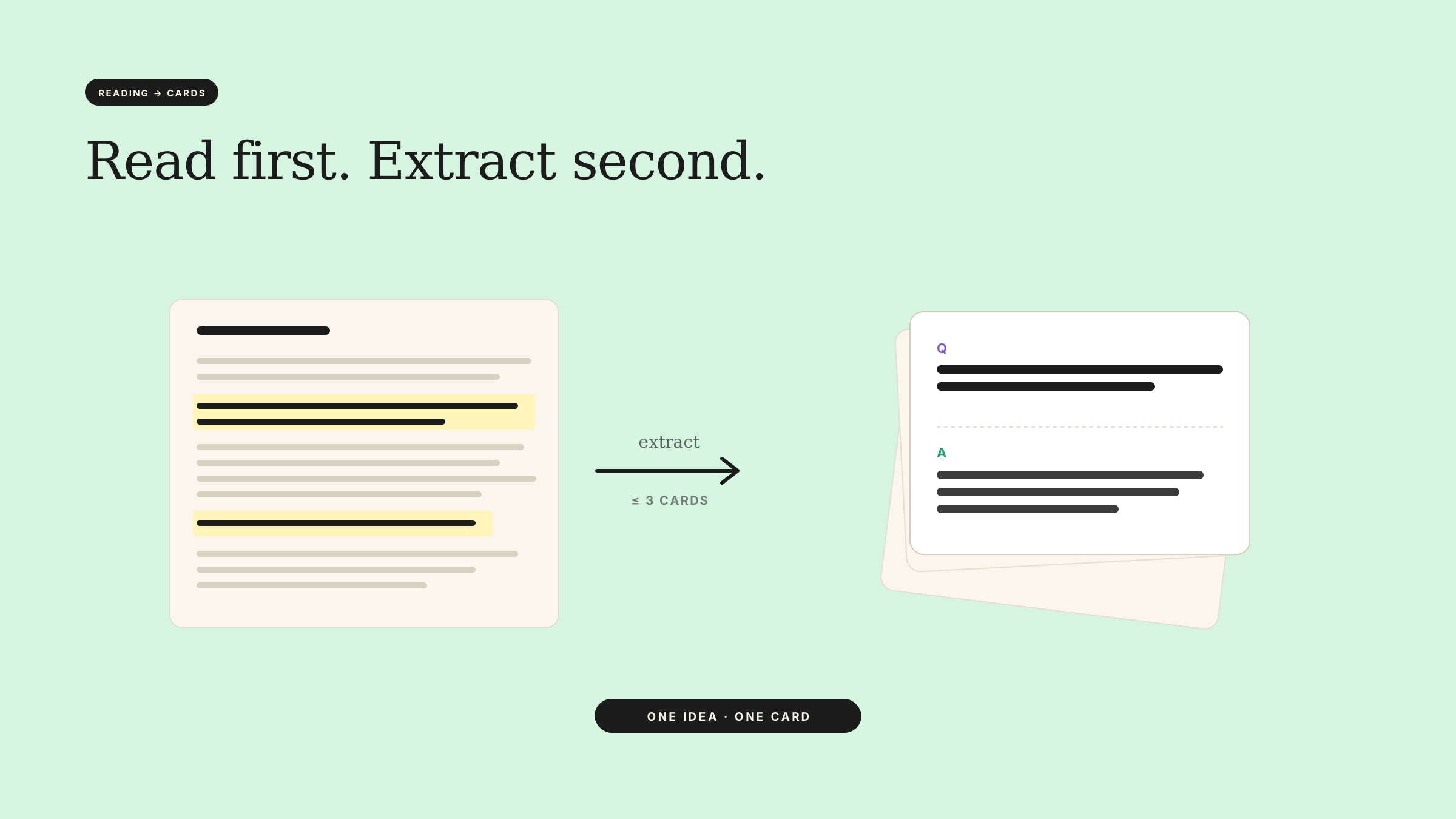
The better move is simple: read first, then extract. That split gives you enough context to pick the right facts without copying the entire page.
The same rule applies if you want to turn reading into flashcards from articles, textbook chapters, or long notes. Don’t ask, “What can I turn into a card?” Ask, “What will I still need next week?”
The minimum viable reading-to-card workflow
Use a three-step pass.
1) Read for meaning.
Don’t stop every time something seems important. Mark the idea in your notes, but keep moving.
2) Pull out only decision-worthy facts.
By “decision-worthy,” I mean facts you’d actually want to recall later without opening the source. Definitions, steps, formulas, dates, named distinctions, and cause-and-effect points usually make the cut.
3) Write one idea per card.
One card should test one thing. Not a whole paragraph. Not a mini essay. One prompt, one answer.
That’s the flashcard workflow from notes in its leanest form. It keeps the work small enough that you’ll actually repeat it.
If you want a practical rule, use this: after reading a section, make at most three cards from it. Most sections don’t deserve more.
What to capture and what to skip
This is where most decks go wrong.
Capture:
- Definitions you’ll need to recognize again
- Steps in a process
- Common confusions between similar ideas
- Key facts that support later chapters
- Formulas, dates, and names only when they matter for the course
Skip:
- Sentences that just restate the same idea in different words
- Examples that explain the point but don’t need memorizing
- Quotes unless your class or exam cares about exact wording
- Tiny details that won’t help you answer a question later
A good card answers one of two things: “What is this?” or “How does this work?” If a fact doesn’t help with either, it probably belongs in notes, not a flashcard.
This is also the easiest way to make flashcards faster without making them worse. You reduce volume before you start drafting cards.
Keep cards reviewable later, not just fast to make
Speed matters, but only if the deck still works a week later.
A usable card has a clear cue and a clean answer. If the front asks, “Explain everything about photosynthesis,” the card will be slow to review and easy to dodge. If it asks, “What does chlorophyll do?” you can answer it fast.
A few rules help:
- Keep the front short.
- Put one fact on the back.
- Use your own wording when you can.
- Avoid cards that hide three separate ideas in one prompt.
That last one matters a lot. A card with three answers feels efficient when you make it and miserable when you review it.
Also, if a concept feels too broad for one card, break it into two or three smaller cards. That takes a little more time up front, but it saves you from bloated reviews later.
The fastest workflow is the one you can repeat
The quickest way to make flashcards is usually the one that looks almost boring.
Read a section. Pull the highest-value facts. Write tiny cards. Stop before the process turns into note surgery.
If you want a concrete benchmark, try this: spend 10 to 15 minutes reading, then 5 minutes extracting cards. That rhythm keeps card creation tied to actual understanding instead of to endless polishing.
And if you already have a pile of notes, don’t rebuild everything. Start with the facts you’re most likely to forget, then work outward only if the deck still feels thin.
That approach keeps the deck small, the review load manageable, and the habit intact.
If you want help turning that into a repeatable system, Draft and Arc can help you build a 2-week plan to turn my reading notes into high-quality flashcards without spending hours on card creation.