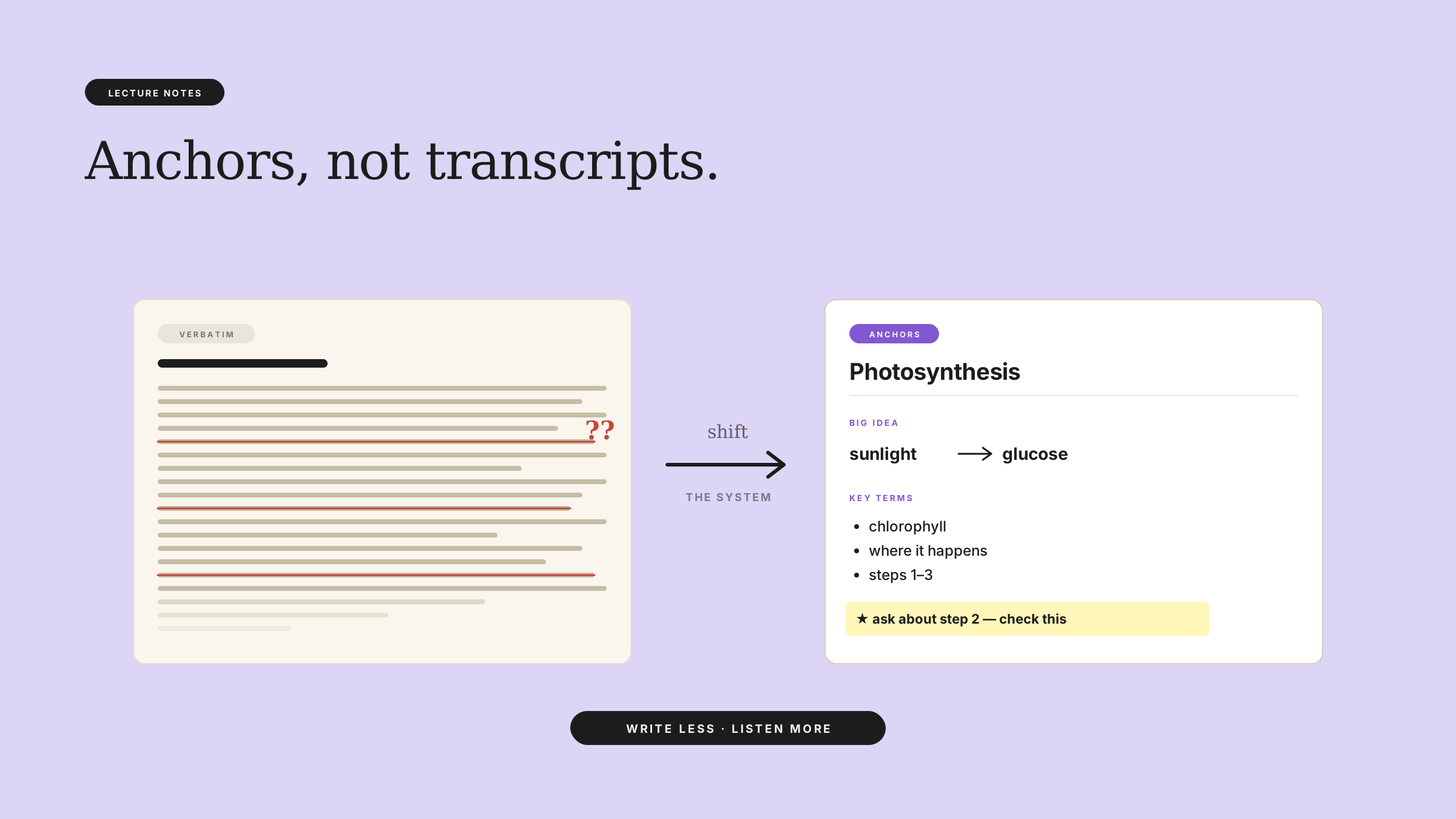
You do not need to copy the lecture to remember the lecture. In fact, that habit is probably what keeps you behind.
The fastest students in class are usually not typing more. They’re choosing less. They catch the structure, the examples, and the terms the professor repeats. Everything else waits until after class.
Why verbatim notes slow you down
If you try to write every word, you stop listening for meaning.
That sounds obvious, but it’s the trap. Your hands move faster than your brain can sort the material, so you end up with messy pages and a half-missed explanation.
A faster lecture note taking system works because it changes the job of your notes. Notes are not a transcript. They’re a memory scaffold.
That means you’re trying to capture:
- the main idea
- the key terms
- the examples that make the idea stick
- anything the instructor flags as important
That’s it. If a sentence does not help you study later, you can usually leave it out.
What to write instead of everything
Start with headings, not full sentences.
If the professor says, “There are three reasons this happened,” write the three reasons as bullets. If they give an example, write the example in a short phrase. If they define a term, copy the term and the short definition, not the whole explanation.
A good lecture notes system usually looks like this:
- topic name at the top
- one line for the big idea
- bullets for supporting points
- quick marks for questions or confusing parts
Use your own shorthand. It does not have to be pretty. “Ex” for example. “Def” for definition. An arrow for cause and effect. A star for “ask about this later.”
This is also how you stop writing everything down without feeling lost. You keep the shape of the lecture, not the full script.
A simple in-class capture system
Use a 3-part loop while the class is live.
1. Listen for structure
Pay attention when the instructor changes gears. Phrases like “first,” “next,” “the important part,” and “for the exam” tell you where to write.
When you hear a new section start, give it a new heading. That single habit keeps your notes clean.
2. Write only the anchors
An anchor is a word or phrase that helps you rebuild the idea later.
For example, if the class covers photosynthesis, you might write:
- sunlight -> glucose
- chlorophyll
- where it happens
- steps 1–3
That is enough to bring the topic back later, even if you did not capture every sentence.
3. Mark the gaps
If you miss a point, do not panic and try to catch up by transcribing faster. Drop a quick marker instead, like “??” or “check this.”
That keeps you in the room. You can repair the gap later.
The students who fall behind usually do not need a better keyboard. They need a smaller target.
How to clean up notes after class
The real learning happens after the lecture, when you still remember the flow but can fix the rough parts.
Spend 10 to 15 minutes on cleanup the same day if you can. That’s enough to turn raw notes into something usable.
Do this in order:
- Fill in the missing words.
- Turn messy fragments into short sentences.
- Add one-sentence summaries under each heading.
- Circle anything you still do not understand.
Keeping your cleaned notes tied to the class — same folder, same doc, same app — makes them far easier to find before an exam than notes scattered across three different places.
Do not rewrite the whole lecture. That just gives you the same problem in a prettier font.
How to know your notes are enough
A lot of students ask for a perfect note system when they really need a test.
Try this: close the notes and explain the topic out loud for two minutes. If you can walk through the main idea, name the key terms, and point to one example, your notes are doing their job.
If you cannot, check for one of these problems:
- you copied details but missed the structure
- you wrote too much and had no time to think
- you skipped the examples that make the idea memorable
- you never marked the parts you didn’t understand
That quick self-check is better than staring at pages and hoping they feel complete.
A good lecture notes system does not make you write more. It makes what you write easier to use.
A note system you can actually repeat
If you want one simple rule, use this: write enough to rebuild the lecture later, not enough to relive it.
That means every page should answer three things:
- What was this class mainly about?
- What were the 3–5 key points?
- What do I need to review later?
That’s the whole job.
Once you stop treating notes like a race, you can actually listen. And when you listen, you usually remember more than the people trying to catch every word.
Want to go deeper? Try this on Draft and Arc: Build me a note-taking workflow for lectures that I can use even when I type slowly.